

-
Welcome to Wittenborg Online, the Moodle Virtual Learning Environment of
Wittenborg University of Applied Sciences!
Online Education & Support System for Learning in Our Bachelor and Master Degree Programmes.
-
2025 | 2026 - Education and Examination Guides - All Programmes
-
2025 | 2026 - Education and Examination Guides - All Programmes
-
-
-
-
-
This glossary contains an overview of some of the terminologies, definitions and abbreviations used at Wittenborg University of Applied Sciences.

Wittenborg Online News!
TourXpeRience Explores How VR Could Change the Way Tourism Students Learn
TourXpeRience Explores How VR Could Change the Way Tourism Students Learn
https://www.wittenborg.eu/tourxperience-explores-how-vr-could-change-way-tourism-students-learn.htm
Teachers Complete XR Training Designed to Create More Immersive Learning Experiences
What if tourism students could practise handling a customer complaint, managing a travel disruption or making marketing decisions before ever entering the workplace?
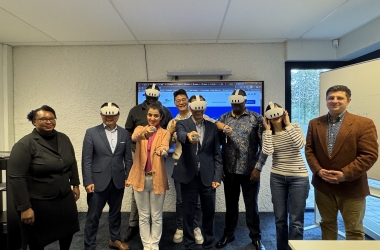
That question was at the centre of the Erasmus+ TourXpeRience XR Teacher Training Programme, which recently concluded at Wittenborg.
Over four sessions, around 15 educators per session explored how Extended Reality (XR) technologies, including Virtual Reality (VR), Augmented Reality (AR) and Mixed Reality (MR), can be used to create more engaging and practical learning experiences in tourism education.
The programme, led by Emmah Muchoki, Lecturer & Education Support, and Vajihe Shojaei, Assistant Professor of Applied Sciences, formed part of the wider TourXpeRience project, a European initiative focused on modernising vocational education and training in the tourism sector through immersive technologies.
Beyond the headset
While VR headsets and immersive environments may sound futuristic, the focus of the training was not technology alone. Instead, participants were encouraged to think about how XR can solve real classroom challenges and help students develop practical skills.
During one workshop, educators were asked to identify areas where students often struggle and consider whether immersive technology could offer a better learning experience.
“Think of a situation in your classroom where students struggle, or where they need more practical training,” Shojaei told participants.
Rather than simply teaching concepts, educators explored how students could learn through experience. One example involved a virtual travel agency where students take on the role of a customer service representative dealing with an unhappy client. The choices students make influence how the scenario develops, creating a realistic environment in which mistakes become learning opportunities.
As participants discovered, effective XR learning starts long before the technology is switched on. Learning objectives, student roles, settings and decision-making moments all need to be carefully designed to create meaningful experiences.
“Not all learning objectives are suitable for XR,” Shojaei explained. “You need to think about whether the technology genuinely adds value.”
Rethinking the role of the teachers as educators
For Muchoki, one of the most interesting outcomes of the programme was the way participants reflected on their role as educators.
“I’m really pleased with how involved the teachers were with the idea of stepping back from giving learners the answers and instead guiding them towards the answers,” Muchoki added. “The discussion about being a facilitator rather than an instructor was a highlight for me during the workshop.”
The training took participants through a step-by-step process, beginning with the pedagogical value of XR technologies and ending with the design of their own XR-enhanced learning activities.
“We wanted teachers to go from simply using XR content to designing immersive learning themselves, and to feel confident doing it,” she said.
By the final session, every participant had developed a first draft of an immersive learning activity that could be further developed in the next phase of the project.
Tackling real challenges
The programme also addressed a reality faced by many educational institutions: introducing new technology in teaching and learning is rarely straightforward.
“The teachers’ biggest worry was very practical: for example, how would you run an XR lesson with 24 students and only six headsets?” said Muchoki.
Discussions focused on practical solutions, classroom management and building confidence among educators who may be using XR technologies for the first time.
Another key takeaway was that successful adoption requires ongoing support.
“One workshop isn’t enough,” Muchoki said. “Teachers need ongoing training and regular chances to use XR and talk to each other about it, because the technology keeps changing and confidence only grows with practice.”
Preparing students for a changing industry
The wider TourXpeRience project aims to help vocational education keep pace with changes in the tourism sector through the use of XR technologies. For students, this could mean more interactive classes, realistic simulations and more opportunities to develop professional skills before entering the industry.
The journey continues on 4 November, when Muchoki and Shojaei will host another TourXpeRience VR training session in Apeldoorn.
WUP 26/10/2026
by Erene Roux
©WUAS Press
Tags
#research
#ResearchCentre
#Erasmus+
#SDG17: Partnerships to achieve the Goal
#GRT1: Digital Revolution
697 words
Hungary Staff Mobility Opens New Collaboration Opportunities for Wittenborg
Hungary Staff Mobility Opens New Collaboration Opportunities for Wittenborg
Vajihe Shojaei and George Bosire Share Insights From Erasmus+ Mobility Trip
For Vajihe Shojaei and George Bosire, a recent Erasmus+ staff mobility programme in Hungary offered an opportunity to step outside their usual academic environment and see how institutions across Europe are approaching teaching, research and internationalisation.
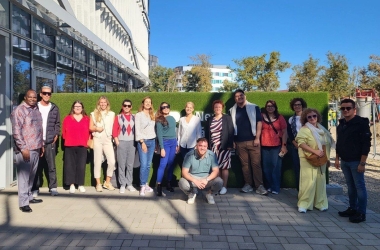
The two Wittenborg staff members visited John von Neumann University in Kecskemét, Hungary, joining lecturers, researchers and project partners from different countries for a week of presentations, discussions and cultural exchange.
Speaking during Wittenborg's Erasmus Days staff mobility briefing on 12 October, both described an experience that was as much about building relationships as it was about learning from different educational approaches.
Shojaei said the process of arranging the mobility was straightforward, thanks to support from Wittenborg's Research Centre.
The programme began with participants introducing their institutions and sharing information about their activities, research interests and potential areas for cooperation. Throughout the week, they attended presentations, networking events and meetings designed to encourage dialogue between participating institutions.
Beyond the formal programme, the visit provided an opportunity to explore Kecskemét, a city Shojaei later described as "a lovely surprise".
"The sightseeing, the visit to the Town Hall, and the Leskowsky Musical Instrument Museum were very enjoyable," Shojaei said. "I also appreciated experiencing the local atmosphere, as it made the mobility more memorable and gave me a better sense of the city and its culture."
The setting left an impression, but it was the conversations that proved most valuable.
After returning to the Netherlands, Shojaei found her inbox filling up.
"I received lots of emails and messages from lecturers or other project owners. They would love to collaborate with us."
Among the ideas now being explored are Erasmus+ projects, research partnerships and mobility opportunities involving both staff and students. She is also developing an Erasmus+ research proposal and hopes to involve some of the academics she met during the visit.
John von Neumann University has already expressed interest in expanding cooperation with Wittenborg, including staff exchanges, student mobility and joint initiatives.
Seeing education through a different lens
For Bosire, one of the most valuable aspects of the programme was hearing how institutions in different countries approach common challenges.
"It was quite a good opportunity to meet educators from different backgrounds, different institutions."
Discussions covered topics ranging from internationalisation and educational quality to teaching methods and student engagement.
Bosire said the exchange highlighted practical ideas that could be adapted or explored further, including guest lectures, collaborative online learning, international case studies, research exchanges and seminars.
"I saw opportunities for collaboration, especially in terms of guest teaching," he said. "Joint learning, for example, coming up with an international case study, a collaborative online project, a research exchange and seminars."
He was particularly interested in the emphasis many institutions place on bringing international perspectives into teaching, regardless of their size.
Are you next?
Wittenborg staff members interested in joining the Erasmus+ outgoing staff mobility programme are encouraged to contact the Research Centre. Recent staff mobility destinations have included Hungary, Romania, Ireland and Türkiye, with opportunities available through Wittenborg's growing international network.
WUP 23/10/2026
by Erene Roux
©WUAS Press
Tags
#Erasmus+
#research
#ResearchCentre
#Internationalisation
#SDG17: Partnerships to achieve the Goal
541 words
Wittenborg Champions Entrepreneurship at Ninth Apeldoorn Business Awards
Wittenborg Champions Entrepreneurship at Ninth Apeldoorn Business Awards
https://www.wittenborg.eu/wittenborg-champions-entrepreneurship-ninth-apeldoorn-business-awards.htm
Renewed Partnership and New Connections Mark a Standout Evening at Orpheus
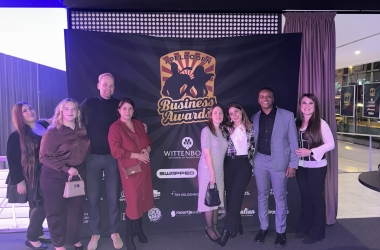
On 15 October, the spotlight was firmly on Apeldoorn's entrepreneurial spirit as the Apeldoorn Business Awards took place at Theater Orpheus.
As a Premium Founder and one of the event's main sponsors, Wittenborg helped kick off the evening with the presentation of the Wittenborg Starters Award, won by Retro Empire Gaming.
The event also marked an important milestone for Wittenborg, following the recent extension of its sponsorship agreement with the Apeldoorn Business Awards for a further three years.
Before the awards ceremony, Wittenborg's Karen Penninga, Maike Zürcher and Aydan Holtrigter represented Wittenborg at a new VIP networking dinner, bringing together entrepreneurs, sponsors and community leaders from across the region. Guests changed tables between courses of the three-course meal, creating opportunities to meet new people, exchange ideas and build new connections.
New conversations, new opportunities
For Holtrigter, the networking format was one of the highlights of the evening.
"It was the first event of its kind organised as part of the awards and I thought it worked very well. I particularly enjoyed the keynote speaker, who gave a short training on communication.
"I also made new contacts and discovered opportunities to work with local partners to increase the impact of Wittenborg's Knowledge Hub."
Those conversations were just the start of an evening focused on celebrating the people and organisations helping to shape Apeldoorn's future.
Celebrating Apeldoorn's best
This year's winners reflected the strength and diversity of the region's business community:
- Retail: Sandmann Optiek
- Wholesale & Services: Talen Vastgoedonderhoud
- Industry & Technology: SPL
- Hospitality & Tourism: Teun Apeldoorn
- Social Organisation: Parc Spelderholt
- Wittenborg Starters Award: Retro Empire Gaming
- Student Encouragement Award: Get Nailed JMC
- Audience Award: Parc Spelderholt
A room full of pride
For Penninga, however, it was not only the winners that made the evening memorable.
"During the evening, the atmosphere was excellent, and it was inspiring to see so many successful local businesses being recognised.
"What stood out for me was the pride and enthusiasm of the entrepreneurs and employees alike, all celebrating their organisations and achievements.
"In the Wittenborg Starter Award category, there were some outstanding nominees who will undoubtedly continue to thrive and further develop their businesses in the years ahead.
"I also felt that Parc Spelderholt was a very deserving winner of both the Audience Award and the Social Organisations category. Congratulations to all the winners and organisers for a fantastic evening."
Beyond the awards themselves, the event also highlighted a defining characteristic of Apeldoorn's business community: its ability to balance international ambition with a strong local connection.
Global impact, local roots
Zürcher said that it was wonderful to see the variety, quality and diversity of businesses in Apeldoorn.
"I think as a city we can be very proud that we have many companies doing business globally while at the same time they are very connected to the local community, often family-run and modest rather than flashy.
"It was also very nice to see that many companies have a social component and intentionally run their businesses in a way that contributes to the community, too. The venue was a very nice setting with lovely music and entertainment."
Looking Ahead
Wittenborg was also represented throughout the evening by Nicoleta Salaru, Allegra Zazzaro, Sean Machaya, Anastasija Kok, Erene Roux and Raymond Rothengatter, owner of Rayflex.
As the evening drew to a close, attention was already turning to the future.
The 2026 event marked the ninth edition of the Apeldoorn Business Awards, with organisers now gearing up for a major milestone: the 10th Apeldoorn Business Awards in 2027.
WUP 21/10/2026
by Erene Roux
©WUAS Press
Tags
#apeldoorn
#societalimpact
#Internationalisation
#internationalstudent
#SDG17: Partnerships to achieve the Goal
626 words
Wittenborg Marks Erasmus Days with Staff and Student Mobility Briefings
Wittenborg Marks Erasmus Days with Staff and Student Mobility Briefings
https://www.wittenborg.eu/wittenborg-marks-erasmus-days-staff-and-student-mobility-briefings.htm
Sessions Showcase Erasmus+ Opportunities for International Study, Training and Collaboration
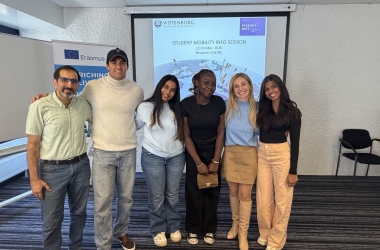
On 12 October, Wittenborg University of Applied Sciences marked Erasmus Days with dedicated Erasmus+ mobility briefings for staff and students, highlighting a programme that has grown steadily since its current mobility activities began in 2024.
Organised by the Research Centre, the sessions were designed to give participants a practical understanding of how Erasmus+ works at Wittenborg, from eligibility and funding to destinations and application procedures.
Opening the staff session, Aydan Holtrigter, Head of Research Partnerships and International Mobility, walked colleagues through the process of applying for mobility opportunities abroad.
She acknowledged that Erasmus+ applications can appear daunting because of the paperwork involved, but said the Research Centre helps staff navigate each step, from identifying a host institution and securing approvals to arranging funding and completing the required documentation.
Holtrigter explained that most staff mobilities at Wittenborg are short-term exchanges lasting between two and five working days. Teaching exchanges require a minimum of eight teaching hours, while training mobilities allow staff to participate in professional development activities at partner institutions and organisations.
While many opportunities are available through Erasmus+ partnerships across Europe, Wittenborg's network also extends further afield through agreements with institutions in countries including Georgia, Egypt, Tunisia, Jordan and Algeria.
"Of course, it's for you, for your professional development and improvement, but it's also for Wittenborg as an institution to learn from its peers," she said.
Wittenborg's international engagement will continue in November when the institution hosts its own International Week from 2 to 6 November. More than 15 participants from partner universities are expected to visit, creating opportunities for Wittenborg colleagues and faculty to connect with international peers, exchange best practices and explore future collaboration in research, mobility programmes and other joint initiatives.
Learning from mobility experiences
The briefing also gave staff the opportunity to hear directly from colleagues who had recently returned from mobility programmes.
Nicoleta Salaru, Front Office & Housing Coordinator, shared her experience in Romania, while Vajihe Shojaei, Assistant Professor of Applied Sciences, and George Bosire, Senior Lecturer and BBA Programme Coordinator, spoke about their recent mobility in Hungary.
Attendees later heard from Temenuzhka Ivova Shtereva (Menekse Onbasi), founder of Artmonia Foundation, a Netherlands-based non-profit organisation that combines arts, education and community-based practices to inspire social change.
Having contributed to Wittenborg's Summer School earlier this year, she introduced additional opportunities through Artmonia, including training courses, learning mobilities and international projects that bring together participants from different countries. Her presentation highlighted initiatives focused on wellbeing, youth work, emotional awareness and community engagement.
Opportunities for students
Later in the day, students attended a dedicated Erasmus+ Student Mobility Briefing covering study-abroad and internship opportunities, partner destinations, application procedures and available funding.
For many students, these opportunities are already a reality. Earlier this year, Wittenborg students travelled to Romania and Türkiye through Erasmus+ mobility programmes, working with peers from across Europe on collaborative academic and professional projects.
Staff and students interested in Erasmus+ opportunities can contact the Research Centre for further information on destinations, funding and application procedures.
WUP 16/01/2026
by Erene Roux
©WUAS Press
Tags
#research
#Erasmus+
#ResearchCentre
#Internationalisation
#internationalstudent
#SDG17: Partnerships to achieve the Goal
538 words
Research Centre Gears Up for Globalisation Forum and International Projects
Research Centre Gears Up for Globalisation Forum and International Projects
https://www.wittenborg.eu/research-centre-gears-globalisation-forum-and-international-projects.htm
October Meeting Highlights Global Collaboration, Student Engagement and TourXpeRience
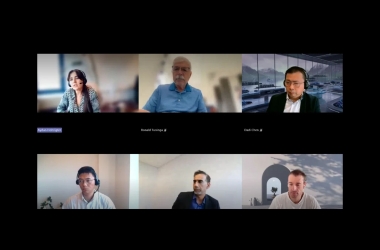
Wittenborg’s Research Centre met online on 7 October, bringing together updates on research, international collaboration and upcoming projects and events.
Head of Research Partnerships and International Mobility Aydan Holtrigter opened the meeting with preparations for the Globalisation Forum, before Erasmus+ Project Coordinator & Researcher Jian Liu shared developments from TourXpeRience. Updates on the research proposal cycle, publication policy and Erasmus+ Days completed the agenda.
Globalisation Forum takes shape
With the Globalisation Forum approaching on 2 and 3 November, Holtrigter outlined preparations for the two-day event and the involvement of Wittenborg colleagues, students and international partners.
The Forum opens at Apenheul Conference Hall in Apeldoorn on Monday, 2 November, before moving to Wittenborg’s Apeldoorn Campus on Tuesday, 3 November.
Bringing together participants from different fields, it will explore how globalisation is shaping the world while creating opportunities to exchange research, ideas and perspectives. Bachelor’s and master’s students will be part of the audience, with students also playing an active role in presenting and sharing knowledge.
The event will have a distinctly international character. Representatives from around eight partner universities are expected to participate, with institutions from Egypt, Tunisia, Jordan, Georgia and Türkiye among those mentioned.
The programme is built around Wittenborg’s 10 research themes, but the discussions themselves will leave room for participating experts to shape the conversation.
Wittenborg Dean Rauf Abdul raised this point during the meeting, asking how moderators should approach potentially interconnected panel themes and whether they could work directly with panellists to establish the focus of their sessions.
Holtrigter encouraged that flexibility, explaining that moderators and panellists could shape their discussions around their expertise while keeping the broader research themes and student audience in mind.
“We leave that fully to the moderators and the panel members to decide,” Holtrigter said.
The approach gives participating academics space to draw on their different backgrounds and perspectives, while keeping discussions relevant and accessible to the wider Forum audience.
TourXpeRience explores new approaches to tourism education
Liu then updated colleagues on TourXpeRience, including its current and upcoming activities and opportunities for further involvement.
The project explores how Extended Reality (XR) can help transform vocational education and training (VET) in tourism. It incorporates technologies including Augmented Reality (AR), Virtual Reality (VR) and Mixed Reality (MR) to create more interactive approaches to teaching and learning.
TourXpeRience responds to the tourism sector’s changing skills needs by supporting the development of digital competencies alongside environmental awareness and sustainable entrepreneurship. It also seeks to help educators integrate emerging technologies into their teaching.
Collaboration plays a central role in the project, bringing together VET and higher education institutions, industry stakeholders, third-sector organisations and policymakers. The aim is to develop approaches that can strengthen tourism education while contributing to a more digitally skilled and environmentally conscious workforce.
Liu’s update invited colleagues to look beyond the project’s technology and consider opportunities to contribute to its ongoing and upcoming activities.
Proposal cycle and publication policy
Research processes formed another part of the October agenda, with Holtrigter providing updates on the proposal cycle and publication policy.
Both subjects had already been explored in greater depth during an earlier teachers’ meeting, allowing the Research Centre session to focus on relevant updates.
The two areas form part of the Research Centre’s wider work to support the development and publication of research across Wittenborg.
All in all, together with the Globalisation Forum and TourXpeRience, these updates reflected the connections between research, education and international cooperation running across the meeting.
From preparing for international discussions in Apeldoorn to exploring XR applications in tourism education, the October session provided a snapshot of the range of activities currently bringing Wittenborg researchers, students and international partners together.
WUP 14/10/2026
by Erene Roux
©WUAS Press
Tags
#research
#ResearchCentre
#Internationalisation
#Erasmus+
641 words
Wittenborg's Amy Abdou Examines What Social Change Really Looks Like
Wittenborg's Amy Abdou Examines What Social Change Really Looks Like
https://www.wittenborg.eu/wittenborgs-amy-abdou-examines-what-social-change-really-looks.htm
Abdou's PhD Explores Social Exclusion in Amsterdam Zuidoost
For years, Amsterdam Zuidoost has been the focus of efforts to tackle educational inequality, unemployment and social exclusion. Governments invested in urban renewal. Schools introduced support programmes. Community organisations and social enterprises launched initiatives aimed at improving opportunities for residents.
Yet despite these interventions, many of the challenges they were designed to address remain. Why?
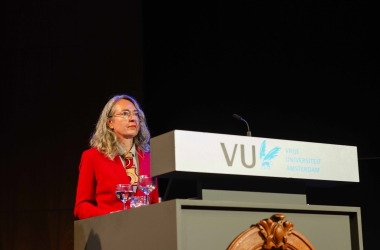
That question sits at the centre of a PhD by Wittenborg's Amy Abdou, whose dissertation, Social Entrepreneurship and Social Exclusion: A Multi-Level Analysis of Education and Employment Initiatives in Amsterdam Zuidoost, examines how social enterprises operate, why some appear more effective than others, and what policymakers can learn from them.
Rather than asking whether social entrepreneurship "works", Abdou asks a more nuanced question: under what conditions can social enterprises contribute to reducing social exclusion?
Across four case studies her research suggests that organisational structure alone does not determine success. Instead, stakeholder participation, community trust, entrepreneurial adaptability and institutional support all shape outcomes.
Social Exclusion in Amsterdam Zuidoost
The first case study examines the history of urban renewal in Amsterdam Zuidoost and the relationship between residents, policymakers and redevelopment projects.
Abdou's analysis suggests that physical investment alone does not necessarily translate into improved social and economic outcomes. While new housing, infrastructure and businesses can transform a neighbourhood, lasting change is harder to achieve when residents have limited influence over decisions affecting their communities.
A recurring theme throughout the dissertation is that participation matters. Social enterprises, governments and public institutions are more likely to gain legitimacy and community support when stakeholders help shape programmes rather than simply receive them.
Educational Inequality and Homework Support
One of the dissertation's most detailed studies focuses on a non-profit homework-support programme serving hundreds of children in Amsterdam Zuidoost.
The findings were encouraging. Half of the participating pupils were ultimately advised to enter a higher level of secondary education than had been indicated in their preliminary school recommendation. Pupils reported greater confidence, improved Dutch-language skills and increased participation in school, while parents and staff were generally positive about the programme.
However, Abdou is careful not to claim causality. Educational outcomes are influenced by many factors, including schools, teachers, parents and home environments.
Instead, the research highlights organisational practices associated with positive outcomes, including small-group learning, strong relationships between tutors and pupils, parental involvement and safe learning environments.
Digital Literacy and Technology Education
Another case study examined two organisations working to expand access to digital literacy and technology education.
The research found that early exposure to technology often influences whether young people continue exploring digital skills later in life. Access to devices, role models, supportive learning environments and extracurricular opportunities all appeared to play an important role.
Although the organisations took different approaches, both relied heavily on partnerships and community engagement. Rather than waiting for large-scale policy reforms, they worked with schools, libraries, volunteers and donors to create learning opportunities and address unequal access to educational resources.
Sustainable Employment and the Energy Transition
The dissertation also explores employment initiatives linked to the renewable-energy sector.
With growing demand for technical workers, policymakers often view the energy transition as a source of future employment opportunities. Abdou examined whether existing training initiatives were accessible to residents who are vulnerable in the labour market.
Her findings suggest that private-sector programmes generally provide stronger pathways to long-term employment through recognised qualifications and clearer career progression. Community and non-profit organisations, meanwhile, were often more accessible and provided mentoring, coaching, networking opportunities and support for entrepreneurship.
Their contribution extended beyond employment, promoting sustainability awareness, strengthening local networks and creating opportunities for collaboration between communities, governments and employers.
What Makes Social Enterprises Effective?
One of the strongest conclusions to emerge from the dissertation is that there is no single organisational model that consistently outperforms the others.
Community enterprises, non-profits, social businesses and private-sector initiatives all displayed strengths and limitations. Some were better at reaching underserved groups, while others were more successful at creating pathways to employment or scaling their activities.
Across all four case studies, one finding appears repeatedly: stakeholder participation matters.
The research concludes that efforts to address social exclusion are more likely to succeed when they combine meaningful stakeholder involvement, diversified funding, adaptable organisational practices and strong relationships between public institutions and local communities.
For Abdou, the challenge is not simply designing better programmes. It is understanding how change happens, who gets involved in shaping it, and how social enterprises, governments and communities can work together to create opportunities that last.
WUP 12/10/2026
by Erene Roux
©WUAS Press
Tags
#SDG11: Sustainable Cities and Communities
#Internationalisation
#Diversity
#research
#societalimpact
778 words
Wittenborg Meets Prospective Students at BSN University Fair 2026
Wittenborg Meets Prospective Students at BSN University Fair 2026
https://www.wittenborg.eu/wittenborg-meets-prospective-students-bsn-university-fair-2026.htm
Admissions Team Engages with International School Community in Voorschoten
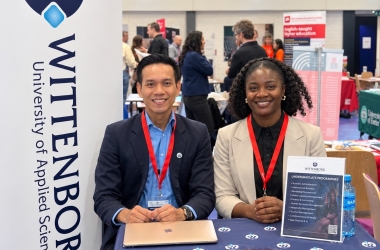
Wittenborg participated in the BSN University Fair on 24 September, connecting with more than 600 students considering their options for higher education.
Held at The British School in the Netherlands’ Senior School Voorschoten, the annual fair brought together higher education institutions from the Netherlands and elsewhere in Europe. Representing Wittenborg were Admissions Assistant Hoang Du Le and Admissions Administrator Patience Orukpe.
Throughout the event, Le and Orukpe answered questions about studying at Wittenborg and helped students better understand the programmes available, entry requirements and application process.
Le described the event as a success, particularly because of the interest shown by those visiting Wittenborg.
“The event was a great success, with many prospective students showing strong interest in Wittenborg’s programmes,” he said.
Orukpe valued the opportunity to hear directly from students about what they were looking for as they considered their next educational step.
“I personally enjoyed engaging directly with students and discussing their study interests and future opportunities,” she said.
Connecting through international education
With nearly 90 nationalities represented within the Senior School Voorschoten community, the fair reflected the international environment familiar to Wittenborg, which brings together more than 120 nationalities.
This diversity made the event particularly relevant for Le, who highlighted “International Education in a Multicultural Environment” as the aspect he enjoyed most. His conversations with students from different backgrounds gave him an opportunity to learn about their ambitions while offering practical guidance on studying at Wittenborg.
Building connections beyond the fair
The event also created opportunities to strengthen connections with the wider school and higher education community.
Le spoke with several teachers from Senior School Voorschoten, who expressed interest in learning more about Wittenborg and its educational programmes. Orukpe, meanwhile, exchanged perspectives with representatives from other universities and gained further insight into the factors students consider when choosing where to study.
For Wittenborg’s Admissions Team, these exchanges complemented their conversations with students and made the fair an opportunity not only to provide information but also to better understand the questions and priorities shaping prospective students’ higher education choices.
WUP 07/10/2026
by Erene Roux
©WUAS Press
Tags
#SDG4: Quality Education
#Internationalisation
#internationalstudent
#studyinholland
373 words
Walmart Ethics Spark Lively Student Debate at Wittenborg
Walmart Ethics Spark Lively Student Debate at Wittenborg
https://www.wittenborg.eu/walmart-ethics-spark-lively-student-debate-wittenborg.htm
Students Put Walmart’s Social Value on Trial during Intercollegiate Debate in Amsterdam
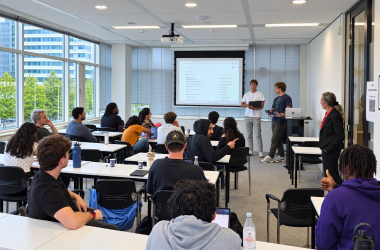
Students from Wittenborg and the IES study abroad programme recently came together in Amsterdam, for a lively intercollegiate debate on the ethics and social value of Walmart.
Founded by Sam Walton in the United States in 1962, Walmart grew from a single discount store into one of the world’s largest retailers. The Walton family continues to hold a significant stake in the publicly traded company, making Walmart an interesting case for examining family business, corporate governance and social responsibility.
Organised by Wittenborg’s Amy Abdou, the debate started with students presenting different perspectives on the retailer. They explored Walmart’s development as a family business, its strengths and weaknesses and criticism surrounding its low-price business model and social impact.
Then it was time to choose sides.
Students were split into two teams, with one arguing that Walmart creates social value and the other making the case that it does not. Abdou encouraged students to challenge themselves by considering a position they might not normally take. And the debate quickly came alive.
Students defending Walmart argued that its low prices benefit consumers, particularly lower-income households, while its size creates jobs and opportunities for employees to move into management.
On the other side, students questioned what those low prices mean for workers, suppliers and smaller businesses. They challenged Walmart’s impact on local communities and raised questions about wages, employee benefits and supply chains.
Challenging the arguments
As the discussion gathered pace, students did more than deliver prepared points. They challenged statistics, questioned sources and responded directly to each other.
A discussion about the effect of Walmart stores on local businesses, for example, prompted competing arguments about jobs and consumer savings. When sourcing came up, students began examining precisely what it means for products to be “made”, “grown”, “assembled” or “sourced” in a particular country.
The conversation soon moved beyond Walmart itself. Students debated wages, healthcare, competition and the respective responsibilities of businesses and governments. They also explored whether complying with the law is enough for a company to be considered socially responsible.
One student argued that social responsibility meant stepping back from what is legally required and considering “what’s morally right”.
More than an academic exercise
For Abdou, that exchange of ideas is an important part of the format.
She regularly organises intercollegiate debates around recognisable companies and industries. Previous discussions have covered Spotify and music rights, as well as Tony’s Chocolonely and ethics in the cocoa industry.
Abdou has noticed that students particularly enjoy the social aspect of the debates, which was something hoped the format would encourage.
That social element continued after the final arguments, when Wittenborg and IES students sat down for lunch together.
WUP 05/10/2026
by Erene Roux
©WUAS Press
Tags
#SDG11: Sustainable Cities and Communities
#SDG16: Peace, Justice and Strong Institutions
#Internationalisation
#internationalstudent
485 words
Wittenborg’s MBA and MBM Programmes Re-Accredited by FIBAA
Wittenborg’s MBA and MBM Programmes Re-Accredited by FIBAA
https://www.wittenborg.eu/wittenborgs-mba-and-mbm-programmes-re-accredited-fibaa.htm
FIBAA Quality Seal Reaffirms International Standards of Wittenborg’s Master’s Programmes
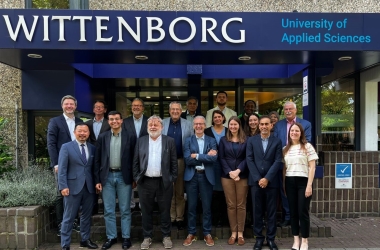
Wittenborg’s Master of Business Administration (MBA) and Master of Business Management (MBM/MSc) programmes have been successfully re-accredited by the Foundation for International Business Administration Accreditation (FIBAA), reaffirming the quality and international standards of the institution’s postgraduate business education.
The decision was adopted by the FIBAA Accreditation and Certification Committee during its meeting on 18 September. The MBA programme has been accredited until September 2033, while the MBM/MSc programme has been accredited until March 2035.
Comprehensive review of programme quality
The re-accreditation followed a comprehensive evaluation of both programmes, covering areas including academic quality, programme design, learning outcomes, assessment practices, student support, internationalisation and quality assurance procedures.
Following the evaluation, FIBAA awarded its Quality Seal to both programmes, acknowledging their continued compliance with internationally recognised quality standards in higher education.
Programme strengths highlighted by FIBAA
The panel also identified several areas in which Wittenborg’s programmes exceeded the required standards. These included:
- positioning of the study programmes in the educational market
-foreign language content
-the international composition of students and teaching staff
-internal cooperation
-student support provided by teaching staff
-administrative support
The panel also rated counselling for prospective students as exceptional, with particular recognition for the support offered before students begin their studies.
The outcome reflects Wittenborg’s continued focus on maintaining high academic standards and providing practice-oriented, internationally focused business education. It also underlines the importance of ensuring that its programmes remain relevant to students, employers and the wider business community.
A collective effort
The successful re-accreditation was supported by contributions from across Wittenborg. Faculty members, students, alumni, programme teams, support departments and external partners were involved in the preparation and evaluation process.
Their contributions helped demonstrate Wittenborg’s educational approach as well as its focus on the continuous development and improvement of its programmes.
For current and prospective students, the FIBAA Quality Seal provides further assurance of the quality, relevance and international recognition of the two master’s programmes. It also supports Wittenborg’s aim of preparing graduates to take on professional and leadership roles in an increasingly international and dynamic business environment.
Wittenborg extends its appreciation to everyone who contributed to the re-accreditation process, as well as to the FIBAA review panel and Accreditation and Certification Committee for their work throughout the evaluation.
The re-accreditation marks another step in Wittenborg’s continued commitment to academic quality and internationally recognised standards in higher education.
WUP 02/10/2026
by Erene Roux
©WUAS Press
Tags
#Internationalisation
#SDG4: Quality Education
#Diversity
#Ethics
#accreditation
#accreditedbusinessschool
426 words
Digital Analytics Won't Guarantee Project Efficiency, People Will
Digital Analytics Won't Guarantee Project Efficiency, People Will

https://www.wittenborg.eu/digital-analytics-wont-guarantee-project-efficiency-people-will.htm
Data-Driven Analytics Delivers Stronger Project Results Depending on Dimensions of Cross-Functional Coordination
For years, organisations have invested heavily in digital analytics to improve performance, streamline operations, and support better decision-making. Yet new research suggests that technology alone is not enough to deliver meaningful improvements in project outcomes.
A collaborative study between Wittenborg and Prince Mohammad Bin Fahd University published in the Journal of Project Management explores how capabilities of digital analytics influence project efficiency.
The study examines how dimensions of cross-functional coordination moderate the effect on project efficiency results. Findings revealed that timely data-driven decisions depend on employees' empowerment, communication skills, and management transparency, which strongly influence effective information exchange across the functions of projects.
Turning Data Into Action
The study found that digital analytics can help organisations identify trends, monitor performance, and make decisions based on changing conditions. Yet the research suggests that insights alone do not improve the efficiency of projects.
Instead, the real challenge lies in turning information into action across organisational functions.
For example, analytics may reveal changing customer needs, project risks, or opportunities to improve resource allocation. However, those insights only create value when different teams can interpret the information, make timely decisions, and collaborate together.
The findings show that organisations are more likely to reduce inefficiencies, improve responsiveness, and deliver stronger project outcomes when departments work in a coordinated way rather than operating in isolation.
Why Communication Matters
One of the study's most significant findings was the importance of communication, management, transparency, and empowering staff.
Among all the dimensions of cross-functional coordination examined, decision-making capabilities and communication skills emerged as the strongest contributors to project efficiency.
The researchers found that organisations achieve better results when management can share information clearly, make evidence-based decisions, and translate analytical insights into practical actions. In project environments where multiple departments are involved, these skills help teams respond more effectively and minimise delays, duplication of effort, and misunderstandings.
Employee empowerment, collaboration and knowledge sharing, transparency of information sharing and management support were also found to play important roles in strengthening project performance.
A Framework for Industry
The research also provides practical guidance for organisations seeking to improve project efficiency in increasingly data-driven environments.
By demonstrating how digital analytics and cross-functional coordination work together, the study offers an evidence-based framework for managers looking to improve responsiveness, optimise resource utilisation, and strengthen decision-making across projects.
Reflecting on the findings, one of the researchers, Emad Tariq, said: "Data alone does not improve performance. Our findings show that project efficiency improves when digital insights are supported by strong communication, empowerment, and transparency of management to improve decision-making across the organisation."
The study concludes that digital transformation is most effective when technology is supported by the organisational capabilities needed to act on data. While analytics can generate valuable insights, organisations achieve the greatest benefits when those insights are shared, understood, and applied across functional boundaries.
WUP 28/09/2026
by Erene Roux
©WUAS Press
Tags
#SDG4: Quality Education
#SDG9: Industry, Innovation and Infrastructure
#Internationalisation
#Diversity
#Impact Statement
#research
511 words